uni
The provided answers serve as a guide and should be used for reference. Achieving full marks requires a comprehensive understanding and application of the material.
SHORT ANSWER QUESTIONS (2M)
1. Define software engineering. How does it differ from computer science?
- Software Engineering is the application of engineering principles to design, develop, test, and maintain software systems.
- It differs from Computer Science as software engineering focuses on practical software development, while computer science is more about algorithms, theory, and computation.
2. What are the advantages of the Agile process model?
- Faster delivery: Agile allows frequent releases of working software, reducing time to market.
- Flexibility: It easily adapts to changing customer requirements even in later stages of development.
- Customer satisfaction: Continuous involvement of customers ensures the final product meets expectations.
- Improved quality: Regular testing and feedback improve the overall quality of the software.
- Team collaboration: Agile promotes strong teamwork and better communication among stakeholders.
3. Define requirement engineering and list its key steps.
- Requirement Engineering is the process of gathering, analyzing, and managing the needs and specifications of a software system.
- Key Steps:
- Elicitation: Collecting requirements from stakeholders.
- Analysis: Understanding and refining the gathered requirements.
- Specification: Writing down the finalized requirements.
- Validation: Ensuring the requirements meet business needs.
- Management: Keeping track of changes and updates to requirements.
4. Explain benefits of software engineering.
- Improved quality: Systematic approaches lead to better and more reliable software.
- Cost and time reduction: Efficient development practices help save time and reduce costs.
- Better project management: Defined processes make it easier to manage complex projects.
- Reusability: Software components can be reused, saving time and effort.
- Customer satisfaction: High-quality software that meets user needs increases satisfaction.
5. Define negotiating and validating requirements.
- Negotiating: Involves resolving conflicts between stakeholders and finding a mutually agreeable solution.
- Validating: Ensures that requirements are complete, consistent, and feasible before development starts.
6. What are the attributes of software quality?
- Functionality: The software should meet the intended purpose and user needs.
- Reliability: The software should function without failures under specific conditions.
- Efficiency: It should use resources like memory and processing power effectively.
- Usability: The software should be easy to understand and operate by the user.
- Maintainability: It should be easy to modify and update when needed.
- Portability: The software should work on different platforms and environments.
7. What is requirement analysis? What are the objectives of requirement analysis?
- Requirement Analysis is the process of defining user needs and system requirements in detail.
- Objectives:
- To identify functional and non-functional requirements accurately.
- To detect and resolve conflicts in requirements.
- To create a clear and complete specification for developers.
8. Write about Object-Oriented Analysis.
- Object-Oriented Analysis (OOA) is a method of analyzing a system by modeling it as a collection of interacting objects.
- Each object has specific attributes (data) and behaviors (methods) that define how it interacts with other objects.
9. Define Flow-Oriented Modeling.
- Flow-Oriented Modeling represents how data flows through a system using Data Flow Diagrams (DFDs).
- It shows how input data is processed and transformed into output data within the system.
10. What is a use case and an actor in scenario-based modeling?
- Use Case: It describes a specific function or task performed by the system in response to a user request.
- Actor: It represents a user or external system that interacts with the system to perform a task.
11. What are the different types of Software?
- System Software: It includes operating systems and utility programs that manage hardware.
- Application Software: Programs designed to perform specific user tasks, like MS Office.
- Embedded Software: Software that controls hardware devices, like washing machines.
- Web-based Software: Applications that run on web browsers, like Gmail.
- Artificial Intelligence Software: Software that simulates human intelligence, like chatbots.
12. What are characteristics of good design?
- Simplicity: The design should be easy to understand and implement.
- Modularity: The system should be divided into independent modules for easier maintenance.
- Reusability: Components should be designed so they can be reused in other projects.
- Scalability: The design should allow the system to handle increased load and complexity.
- Maintainability: The system should be easy to modify and fix in the future.
- Flexibility: The design should accommodate future changes without major rewrites.
LONG ANSWER QUESTIONS (7M)
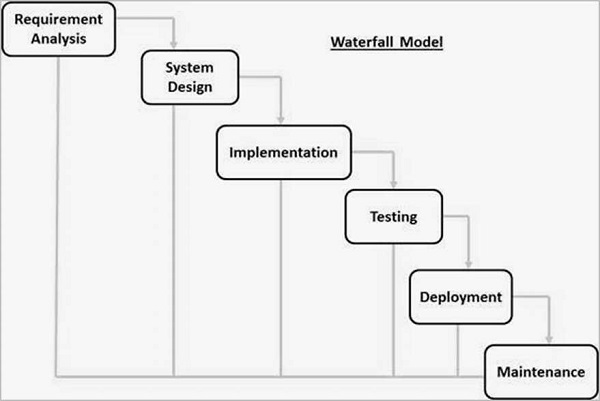
1. Explain the Waterfall Process Model with a neat diagram.
Definition:
The Waterfall Model is a linear sequential model where the software development process is divided into distinct phases. Each phase must be completed before the next phase begins, and there is no overlapping between phases.
Phases of the Waterfall Model:
- Requirement Gathering and Analysis:
- In this phase, all functional and non-functional requirements are collected from stakeholders and documented.
- System Design:
- Based on the requirements, the system architecture and design are created. This includes high-level and low-level design.
- Implementation (Coding):
- The actual coding takes place based on the design specifications.
- Testing:
- The developed code is tested to ensure that the software meets the specified requirements and is free of defects.
- Deployment:
- The software is deployed to the production environment for customer use.
- Maintenance:
- After deployment, regular updates, bug fixes, and enhancements are handled in this phase.
Diagram:
Advantages:
- Simple to understand and easy to manage.
- Works well for small projects with clear requirements.
- Phases are well-defined and structured.
2. Describe the phases of the Agile process model and mention its advantages.
Phases of the Agile Process Model:
- Concept:
- Project scope and objectives are defined.
- Inception:
- Team members are identified, initial requirements are gathered, and funding is allocated.
- Iteration/Increment:
- The project is divided into smaller modules that are developed, tested, and deployed in short cycles (sprints).
- Release:
- After completing a few iterations, a working product is released for customer feedback.
- Production:
- The software is used by the end-users, and support is provided as needed.
- Retirement:
- The product is removed from the market or replaced with a new version.
Advantages:
- Highly flexible and adaptable to changes.
- Continuous customer involvement increases satisfaction.
- High-quality product due to regular feedback and testing.
- Faster delivery of functional products.
- Promotes team collaboration and communication.
| Feature | Prototyping Model | Spiral Model |
|---|---|---|
| Definition | Develop a prototype, gather feedback, and refine the product. | Combines iterative development with risk assessment. |
| Phases | Requirement gathering → Prototype development → Evaluation → Refinement → Final product | Planning → Risk analysis → Engineering → Evaluation |
| Focus | Customer feedback and requirement clarification | Risk management and project complexity |
| Risk Management | Low | High |
| Use Case | Suitable for systems with unclear requirements | Suitable for large and complex projects |
| Cost | Lower | Higher due to risk analysis |
| Feedback | Immediate | Collected after each spiral cycle |
4. Explain Requirement Analysis and discuss its objectives.
Definition:
Requirement Analysis is the process of understanding user needs and defining the system requirements in detail to create a clear and precise specification for the software.
It helps identify what the system should do and how it should perform under different conditions.
Phases of Requirement Analysis:
- Requirement Elicitation:
- Involves collecting requirements from stakeholders through interviews, surveys, and observation.
- Focuses on understanding business goals, user needs, and technical constraints.
- Requirement Analysis:
- Analyzes and refines the collected requirements.
- Identifies conflicts, missing details, and inconsistencies.
- Requirement Specification:
- Formal documentation of the refined requirements.
- Includes functional, non-functional, and technical specifications.
- Requirement Validation:
- Ensures the documented requirements align with business needs.
- Involves stakeholder review and feedback.
Objectives:
- Complete Understanding: Ensure a clear understanding of what the system should do.
- Conflict Resolution: Identify and resolve conflicts among stakeholder needs.
- Feasibility Check: Confirm that the requirements are realistic and achievable.
- Documentation: Create a detailed requirement document for developers.
- Traceability: Establish a link between requirements and the final product.
5. Discuss various communication principles in software engineering.
1. Listen Actively:
- Pay full attention to stakeholders without interrupting.
- Take notes and clarify any doubts immediately.
2. Ask Questions:
- Ask open-ended and specific questions to uncover hidden requirements.
- Encourage stakeholders to elaborate on unclear points.
3. Use Simple Language:
- Avoid technical jargon when speaking with non-technical stakeholders.
- Ensure that all parties understand the terminology used.
4. Confirm Understanding:
- Summarize discussions and repeat key points to confirm understanding.
- Send follow-up emails or documentation to prevent miscommunication.
5. Encourage Feedback:
- Create an environment where stakeholders feel comfortable providing input.
- Incorporate feedback into the development process.
6. Document Communication:
- Keep records of all meetings, decisions, and feedback.
- Ensure that all communication is traceable for future reference.
6. Explain elements of a computer-based system.
1. Hardware:
- Physical components like CPU, memory, storage, input/output devices, and networking equipment.
- Provides the foundation for executing software instructions.
2. Software:
- System software (e.g., operating system), application software (e.g., MS Office), and utility software (e.g., antivirus).
- Defines how hardware resources are used to execute tasks.
3. People:
- End-users, developers, testers, and system administrators.
- Responsible for interacting with the system and maintaining it.
4. Data:
- Raw facts and figures processed by the system.
- Stored and manipulated to provide meaningful information.
5. Procedures:
- Rules and instructions for using the system.
- Define how users and system administrators should interact with the system.
6. Communication:
- Network infrastructure that allows data exchange between systems.
- Includes internet, LAN, and wireless networks.
7. Explain Umbrella Activities in Software Engineering.
1. Project Planning:
- Defines goals, resources, timelines, and budgets.
- Sets the foundation for successful project execution.
2. Risk Management:
- Identifies potential risks and creates mitigation plans.
- Ensures that risks are minimized during development.
3. Quality Assurance:
- Implements testing and validation processes to ensure software quality.
- Identifies and fixes bugs early in the development cycle.
4. Configuration Management:
- Tracks changes to code, requirements, and design.
- Ensures consistency across different versions.
5. Reusability Management:
- Identifies reusable components to reduce development effort.
- Promotes modular design for easier maintenance.
6. Measurement and Reporting:
- Tracks project progress using performance metrics.
- Provides stakeholders with regular updates on project status.
8. Explain in detail types of design classes.
1. Entity Classes:
- Represent real-world objects like customers, products, and orders.
- Define data attributes and relationships between entities.
2. Boundary Classes:
- Handle interaction between the system and external actors.
- Example: User interface components like forms and buttons.
3. Control Classes:
- Manage the flow of control and business logic.
- Example: A class that processes order transactions.
4. Abstract Classes:
- Define common behavior for other classes.
- Cannot be instantiated directly; used as a blueprint.
5. Utility Classes:
- Provide helper functions for common tasks.
- Example: Mathematical operations, string manipulations, etc.